WireGuard 1G IP Core: Hardware-Based Security and Zero CPU Usage VPN on FPGA
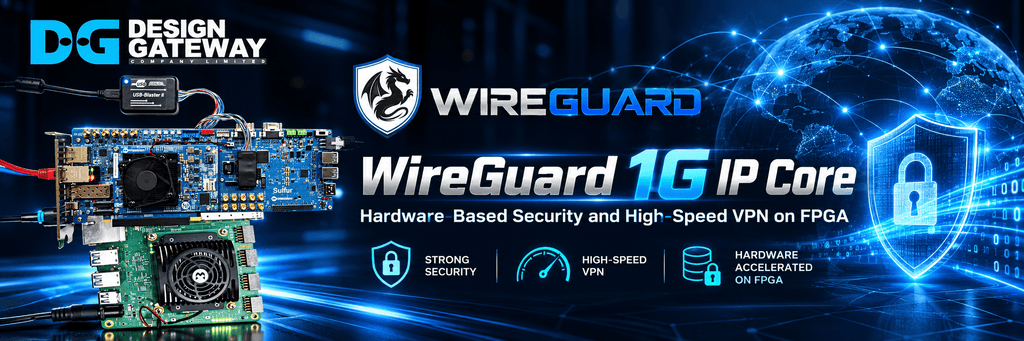
In high-speed networking, security and performance often come at the expense of CPU resources. Design Gateway’s WireGuard 1G IP Core introduces a complete WireGuard VPN tunnel running at a full 1 Gigabit line rate entirely inside the FPGA fabric.
In high-speed networking, security and performance often come at the expense of CPU resources. Design Gateway’s WireGuard 1G IP Core introduces a complete WireGuard VPN tunnel running at a full 1 Gigabit line rate entirely inside the FPGA fabric.
🛡️ Beyond CPU Offload: True Hardware-Based Security
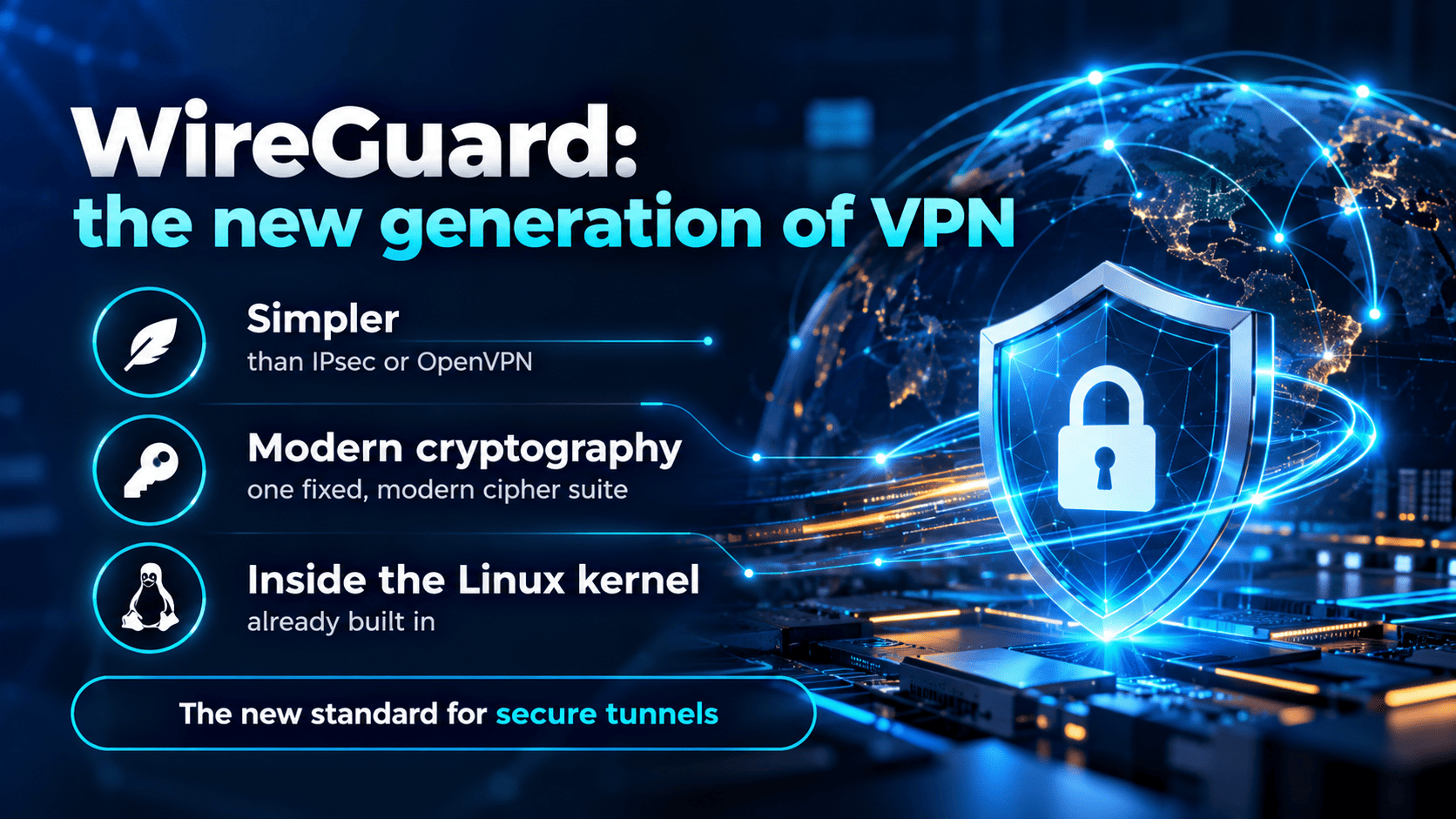
WireGuard is rapidly becoming the modern standard for secure tunnels due to its simplicity and modern cryptography built right inside the Linux kernel. However, in a software implementation, every single packet must be encrypted and authenticated by the CPU, resulting in high CPU load and reduced processing power for your core applications.
⚡ Why FPGA Fabric Matters in the Era of AI Agents
Security challenges are evolving. Today, sophisticated AI agents with cyber-security capabilities can explore operating systems, probe software interfaces, and exploit vulnerabilities.
Software VPN Vulnerabilities
Software VPNs live inside the OS, surrounded by drivers, shells, and system layers that remain potential targets for software-based attacks.
FPGA Hardware Protection
The entire tunnel runs as pure hardware logic—eliminating the attack surface entirely because there is no OS, driver, or software interface.
🔍 Inside the WireGuard 1G IP Core Architecture
The entire cryptographic suite—including the handshake, X25519, BLAKE2s, and ChaCha20-Poly1305—runs directly as pure hardware logic with a built-in protocol stack. Even advanced AI agents will find no software stack or operating system to infiltrate inside the FPGA fabric.
🌐 Network Setup & Live Demonstration
The User PC connects directly to the FPGA over a 1 Gigabit Ethernet link. Its single network interface is configured with two IP addresses — one for network communication, and one as the WireGuard tunnel IP.
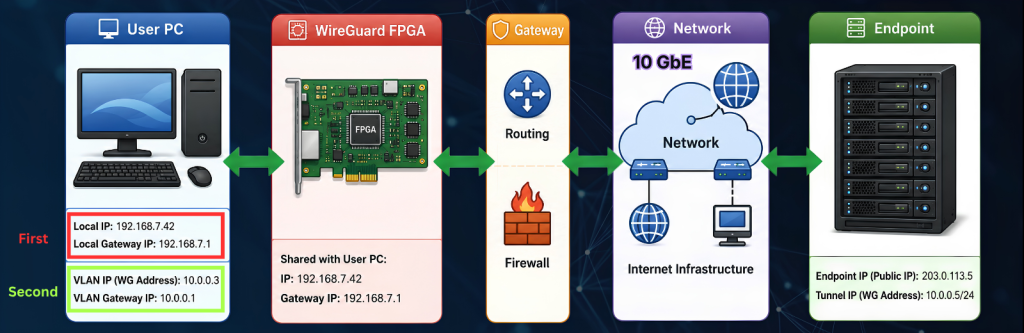
First, IP address for normal network communication
Second, IP address for the WireGuard tunnel
The FPGA shares the same IP and MAC address as the User PC, so it can transparently intercept traffic. On the other side, encrypted WireGuard traffic is routed out through the Gateway across the network, and delivered to the Endpoint. The Endpoint is reachable through its WireGuard tunnel IP, just like any peer on a private network.
To demonstrate real-world file transfers, we utilize a Samba file share. On the Endpoint PC, a Samba share is already configured and exposed over the WireGuard tunnel IP. We then copy a large file from the User PC into the share. The transfer progresses smoothly — moving across the encrypted tunnel with no special setup required.
🖥️ Easy Configuration with WireGuard Demo GUI
To simplify configuration and monitoring, Design Gateway provides the WireGuard Demo GUI. Users can import an existing .conf file and click Activate. The GUI automatically configures both the FPGA and the User PC.
- 1. Import
tunDemo.Configfile.
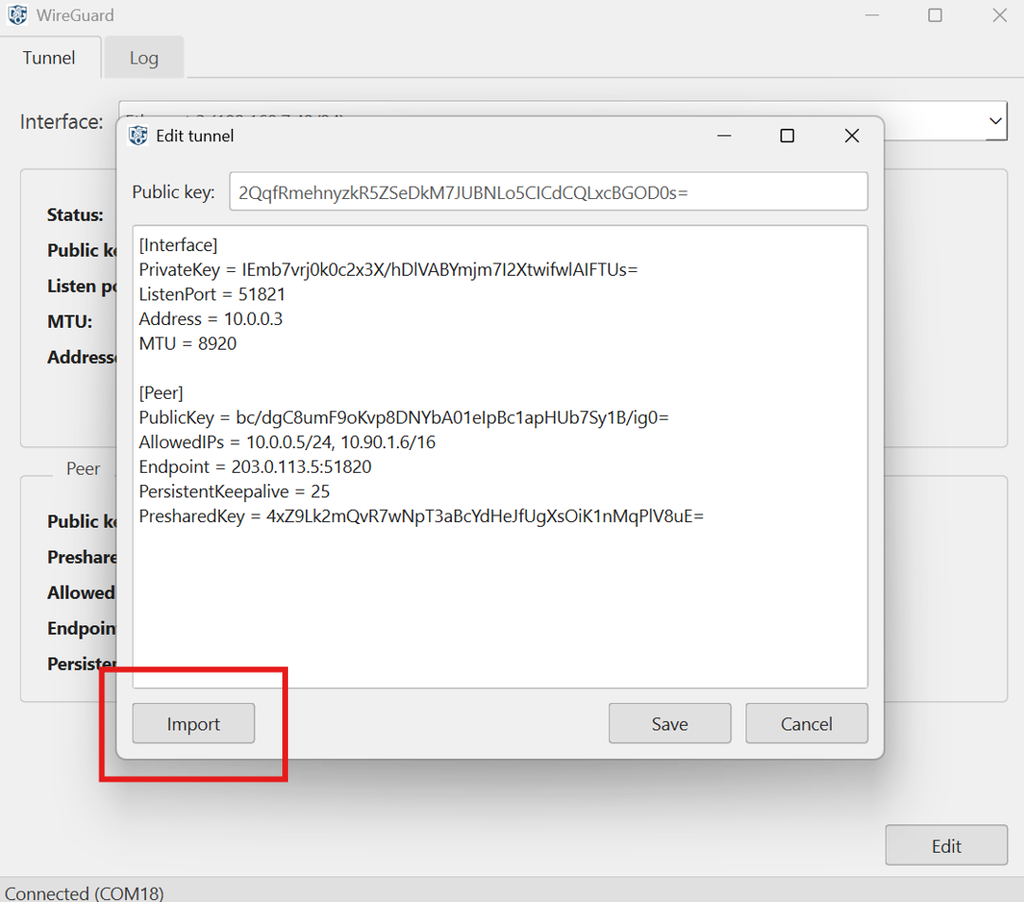
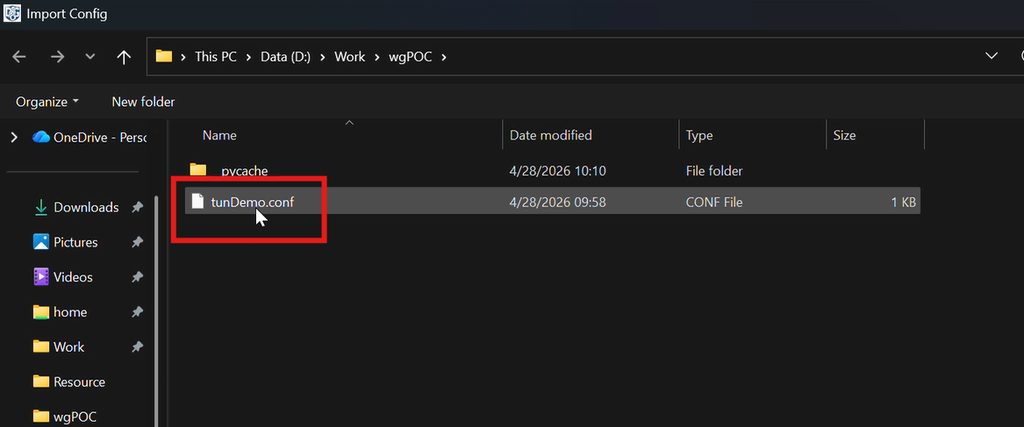
2. Click Activate.
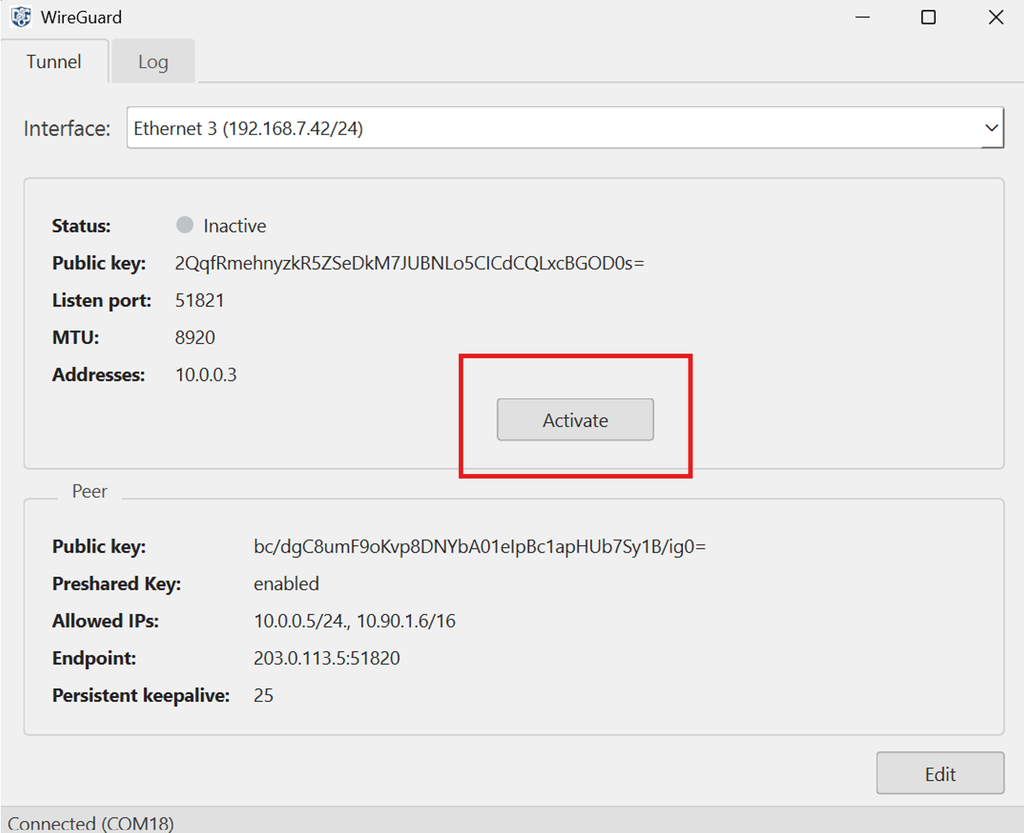
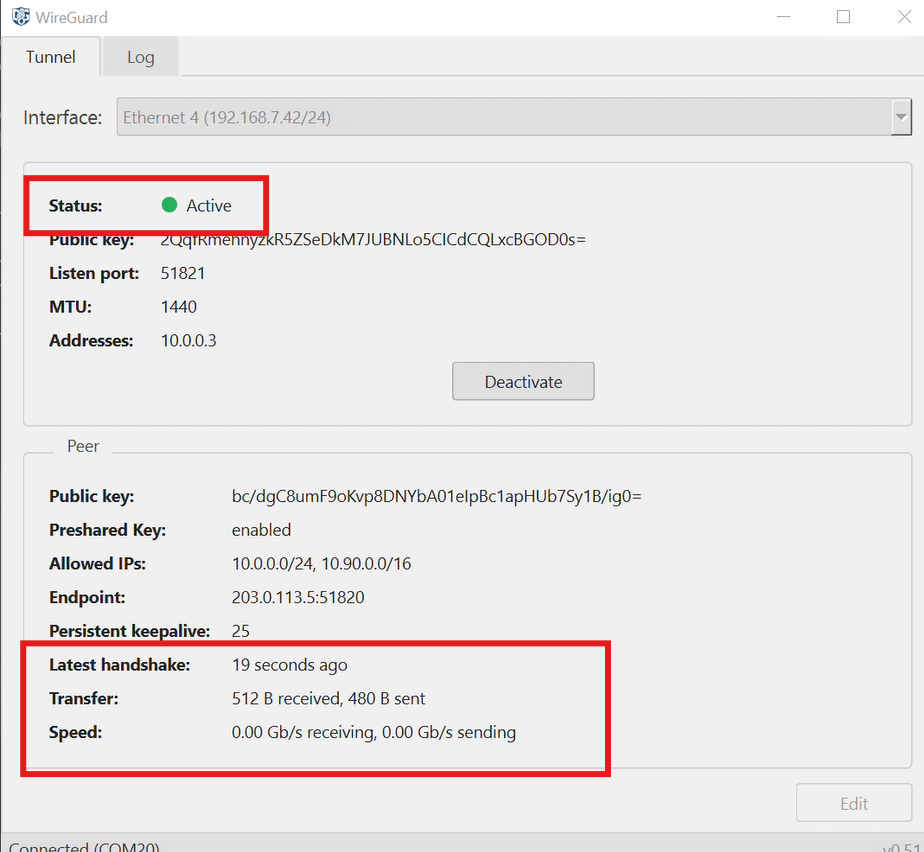
Once the WireGuard handshake is completed, the GUI displays live connection status, including transfer speed, transferred bytes, and handshake status. This makes it easy to verify that the tunnel is active and operating correctly.
📁 Verifying the Tunnel with Samba File Transfer
After the tunnel is configured, real-world traffic is tested using a Samba file transfer. On the Endpoint PC, a Samba share is exposed over the WireGuard tunnel IP.
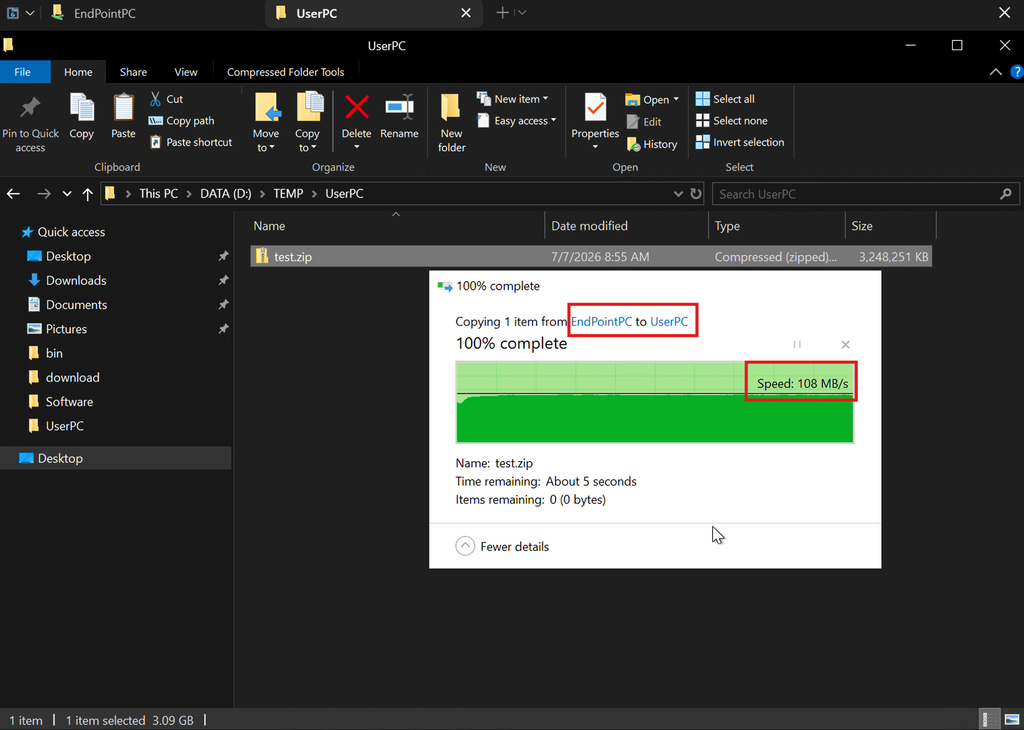
The User PC accesses this Samba share through the secure WireGuard tunnel, confirming that normal application traffic can pass through the encrypted FPGA-accelerated VPN connection.
📈 Performance & Line-Rate Stress Testing
To evaluate maximum bandwidth capabilities, we run iperf3 in full-duplex with 4 parallel streams to fully stress the link. Looking at the results, the transmit side reaches 925 Mbps and the receive side reaches 978 Mbps, sustaining near-maximum line rate effortlessly.
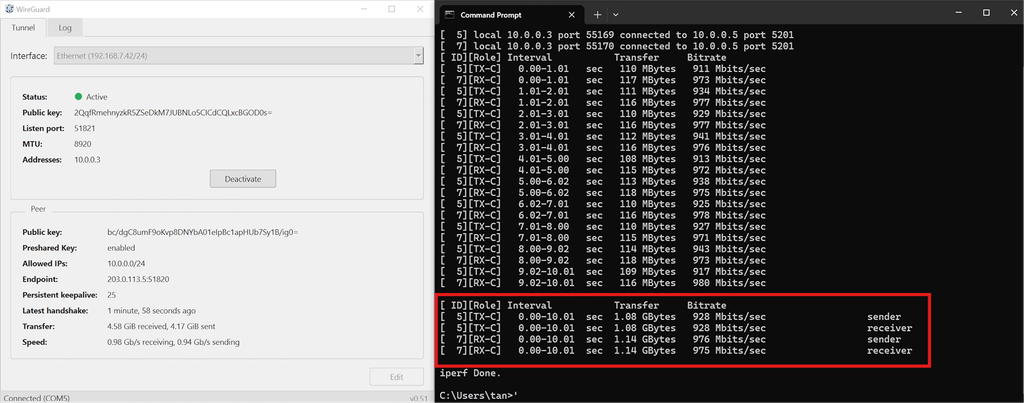
| Transmit Throughput | Receive Throughput | Combined bidirectional throughput |
|---|---|---|
| 925 Mbps | 978 Mbps | approximately 1.9 Gbps |
This result demonstrates that WireGuard 1G IP can deliver high-speed encrypted communication close to the practical performance range of a 1G Ethernet environment.
🏢 Typical Deployment Scenario & Applications
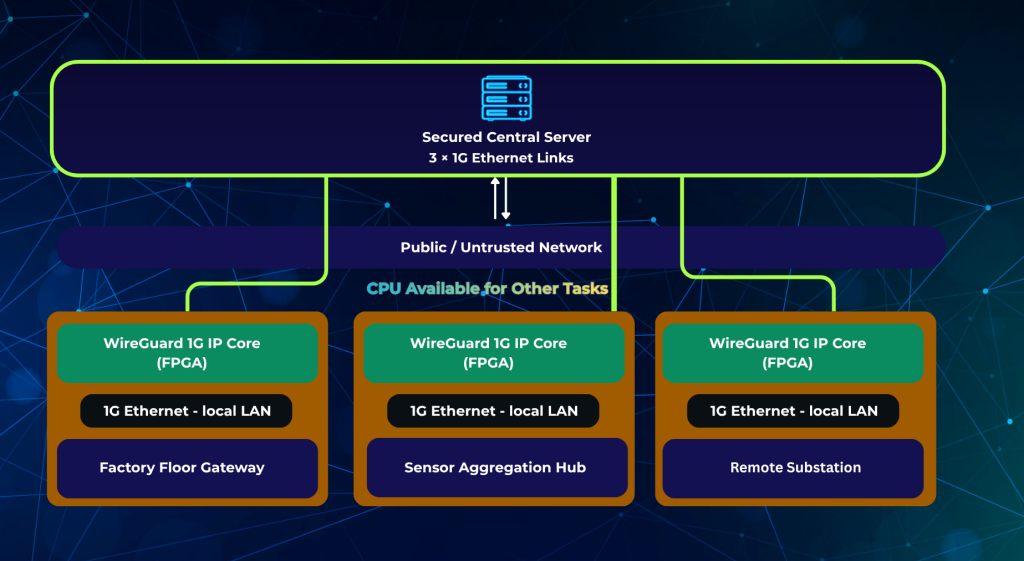
Consider a secured central server with three 1 Gigabit links, aggregating traffic from three remote sites — such as a factory gateway, sensor hub, and remote substation — across an untrusted network.
With VPN processing in hardware, each site can encrypt traffic before it leaves the local network, while keeping the CPU free for other tasks.
As a compact FPGA IP core, WireGuard 1G can be integrated into diverse mission-critical applications:
1
Industrial Automation
2
Energy Grids
3
Video Surveillance
4
Medical Equipment
5
Automotive Networks
6
Aerospace
🎯 Practical Use Cases at 1 Gigabit Line Rate
- Encrypted Backups: Securing data backups at full link speed without dropping performance.
- Edge-to-Data Center AI: Securely transferring sensitive AI models between edge devices and data centers.
- Field Logging: Protecting confidential log data in remote field deployments while keeping the CPU completely free.
🔍 Learn More About WireGuard 1G-IP
Product Page
Technical Documents
📦 Free Evaluation File
Start your evaluation with reference designs and demo environments prepared for Design Gateway IP core solutions.
🧪 Demo & Evaluation
A demonstration environment is available for developers who would like to evaluate the WireGuard 1G IP Core and experience true hardware-based security with high-speed performance. The demo includes:
- Hardware-based cryptographic suite (X25519, BLAKE2s, ChaCha20-Poly1305)
- 1 Gigabit line-rate throughput and full-duplex iperf3 stress testing
- Easy configuration using the WireGuard Demo GUI (
tunDemo.Configfile integration) - Transparent traffic interception and Samba file transfer verification
- Zero host CPU load for encryption processing
Ready to Evaluate the WireGuard 1G IP Suite?
For evaluation availability, reference designs, and supported hardware, please get in touch with Design Gateway.
Contact Design Gateway